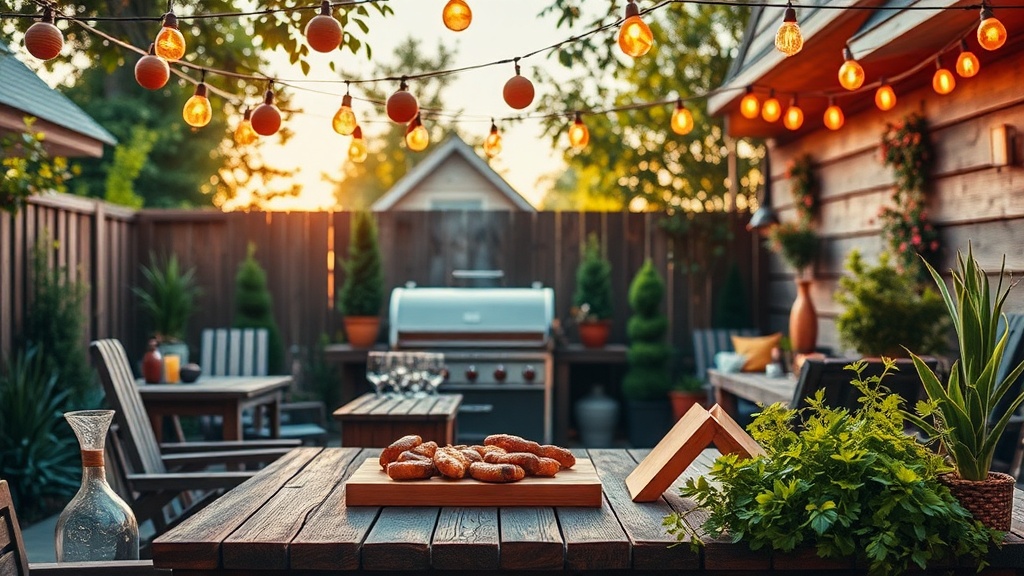
Preparing Your Backyard for a Local Summer BBQ

This guide provides a practical checklist for preparing your backyard for summer hosting, focusing on equipment maintenance, local weather considerations, and efficient outdoor setups. You'll find specific advice on cleaning your grill, managing Atlantic Canada's unpredictable weather, and organizing your outdoor space for guests.
How Do I Prepare My BBQ for the Season?
You should start by performing a deep clean of your grill to remove any leftover grease or debris from last year. If you've been storing your grill under a cover, check the burners and igniters for any signs of rust or blockage. It's not uncommon for the Atlantic humidity to cause a bit of oxidation during our long winters.
Grab a wire brush and some high-quality grill cleaner. If you're using a Weber Genesis or a Napoleon gas grill, check the heat distribution between the burners. Sometimes, a simple way to fix a low flame is to clear the tiny holes in the burner tubes with a thin wire or a toothpick.
- Scrub the Grates: Use a heavy-duty brush to remove carbon buildup.
- Check the Gas Lines: Inspect your propane tank connections for any cracks or leaks. You can use a simple soapy water test—if bubbles form, you've got a leak.
- Clean the Drip Tray: Don't let old grease sit there; it's a fire hazard and smells terrible.
- Inspect the Igniters: If your electronic ignition isn't clicking, you might just need a new battery or a quick cleaning of the electrode.
If you have a charcoal grill, check the ash buildup. It's a small detail, but a clean chimney ensures much better heat control when you're actually cooking. Don't forget to check your propane tank levels before you start buying the steak!
How Can I Manage Unpredictable Weather During a BBQ?
The best way to handle Newfoundland's unpredictable weather is to have a "Plan B" that involves a tent, a gazebo, or an indoor space. One minute it's sunny in Mount Pearl, and the next, a sudden downpour hits. It's just part of the deal here.
I always recommend having a high-quality pop-up canopy, like a Coleman Shelter or a way more heavy-duty Gazelle shade structure, ready to go. These aren't just for sun; they are your primary defense against a sudden summer shower. It's better to have it and not need it than to be soaking wet while trying to flip burgers.
Also, consider the wind. Our coastal winds can pick up quickly, which can blow out your grill flames or knock over lightweight patio furniture. Secure your umbrellas and lightweight chairs. If you're planning a large event, check the Environment Canada weather forecast a few hours before your guests arrive. It's a habit that saves a lot of stress.
Worth noting: even if the sun is out, the humidity can make it feel much heavier. Having a few high-powered outdoor fans can help keep the air moving around your dining area. It keeps the heat down and helps keep the bugs away too.
What Are the Best Ways to Organize an Outdoor Dining Area?
Organize your space by creating distinct zones for cooking, dining, and lounging to ensure guests can move freely without bumping into the chef. A well-organized backyard prevents the "bottleneck" effect where everyone crowds around the grill and blocks the path.
I like to think of my backyard in sections. You have the "Hot Zone" (the grill), the "Prep Zone" (a side table), and the "Social Zone" (the dining table). This keeps the person cooking from being stepped on by people holding drinks.
| Zone Type | Essential Items | Pro Tip |
|---|---|---|
| The Hot Zone | Grill, Heat-resistant gloves, Spatula, Tongs | Keep this away from high-traffic walkways. |
| The Prep Zone | Large cutting board, Serving trays, Salt/Pepper | A sturdy side table is a lifesaver. |
| The Social Zone | Seating, Outdoor rug, Lighting, Music | Use battery-operated LED lights for safety. |
If you're short on space, a foldable table from a place like Canadian Tire is a great investment. You can set it up for the meal and tuck it away once the plates are cleared. It makes the transition from dinner to lounging much smoother.
If you're hosting a movie night later in the evening, you might want to look into hosting a backyard movie night. It's a great way to transition from a BBQ to a full evening of entertainment. Just make sure your seating is comfortable for long periods of time.
How Much Does Backyard Entertaining Cost?
The cost of backyard entertaining varies wildly depending on whether you are buying new equipment or just refreshing what you already own. You can spend $50 on a few bags of charcoal and some local veggies, or $2,000 on a new high-end gas grill and a patio set.
Let's break down a realistic budget for a standard local BBQ. Most of the "big" costs are one-time investments, while the recurring costs are the food and fuel.
- One-Time Upgrades: A new patio set or a high-quality gazebo can range from $300 to $1,500.
- Consumables: A bag of charcoal or a propane tank refill usually costs between $15 and $30.
- Food & Drink: For a group of 10, expect to spend roughly $150-$250 on high-quality meats and local seasonal produce.
- Ambiance: String lights or fire pit fuel (wood or propane) are small costs that make a huge difference in the vibe.
Don't feel pressured to buy everything new. Check local community groups or even thrift stores for sturdy outdoor furniture. A bit of spray paint and some new outdoor cushions can make an old set look brand new. It's much more budget-friendly than buying a whole new set every year.
If you're looking for fresh ingredients to keep costs down and quality up, visit your local market. Savoring seasonal flavors at local farmers markets is a great way to get high-quality produce without the supermarket markup. It also supports our local growers, which is a win-win.
When you're planning your menu, remember that simplicity is your friend. You don't need a five-course meal. A great burger, some local corn, and a cold drink are often more memorable than an overly complicated dish that leaves the cook stuck in the kitchen all night. The goal is to enjoy your backyard, not just work in it.
Lastly, don't forget the lighting. As the sun goes down, the atmosphere changes. String lights or even a simple fire pit can transform a basic backyard into a cozy retreat. It makes the space feel intentional and welcoming, rather than just an afterthought. Whether you're using a portable fire pit or a built-in feature, it adds that much-needed warmth to a cool Atlantic evening.
Steps
- 1
Clean the Grill and Patio Area
- 2
Arrange Comfortable Seating
- 3
Set Up Lighting and Ambience
- 4
Stock Your Outdoor Essentials